
Custom Waterproof PVC Toiletry Pouch Kits Women Portable Beauty Transparent Makeup Bag Girl Travel Clear Cosmetic Bags
MB-3911 · Leather & PU
Transparent PVC makeup bags and toiletry pouches for retail counters, travel programs and promotional kits — waterproof builds with welded or zippered closures, MOQ 500 pcs, your logo printed or debossed.
MOQ: 500 pcs · OEM/ODM accepted · [email protected]
Clear bags pair transparent PVC panels with PU trim and binding — see model MB-3911 (waterproof PVC toiletry pouch kits) for the construction. Waterproof options by build: heat-welded seams, waterproof zippers, and coated fabrics from 3,000 mm hydrostatic head (PU/PVC) up to 10,000 mm (TPU lamination) for the fabric portions of a kit.
Clear pouches are a staple of travel retail: for US air travel, the TSA 3-1-1 rule limits carry-on liquids to 100 ml containers inside one quart-size clear bag (per TSA rules) — which is why clear toiletry kits are a permanent repeat order for airlines, hotels and beauty retailers. Clear builds are also used for cosmetics counters, promotional kits and gift-with-purchase programs.
MB-3911 · Leather & PU

MB-3924 · Leather & PU

MB-665 · Polyester & Nylon
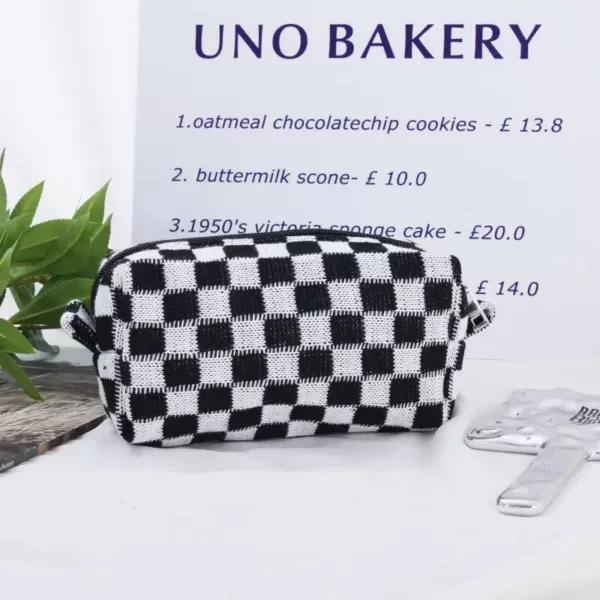
CBB-6161 · Canvas & Cotton
MOQ 500 pcs per style. Paid samples in 1–10 days; revised samples 2–3 days per round. Pantone solid color matching to ΔE ≤ 2.0 from 200 pcs per color; logo references from laser ~100 pcs and woven label ~300 pcs — full terms on the wholesale page.
Send the model number or your clear-bag spec plus target quantity.
Clear makeup bag bulk buyers usually start with one question: which film should the body use? The answer is never automatic. It depends on how the bag will be cleaned, what it will hold, and whether the buyer needs a soft drape or a structured shell. Most clear cosmetic bag wholesale programs fall into three material families. There's PVC film, TPU film, and a clear-window hybrid where only part of the bag is transparent.
PVC is the workhorse. It's inexpensive, widely available in gauges from roughly 0.3 mm to 0.8 mm, and takes high-frequency welding well. A welded PVC seam is strong and clean. But PVC gets stiff when it is cold. It can also pick up scratches faster than buyers expect, and the plasticizer smell is noticeable in a closed carton. Say a buyer wants a stadium-approved clear bag at a sharp price. PVC is the rational choice.
TPU behaves differently. It stays flexible at low temperatures, resists yellowing better than standard PVC, and has a softer hand feel. The trade-off is cost. TPU film can run several times the price of PVC for the same gauge. A buyer who needs a premium clear cosmetic bag bulk order for a beauty brand will often choose TPU. The end customer touches the bag every day. The feel matters.
Some buyers want transparency without committing to an all-film body. A hybrid construction uses a clear film front panel with a textile back, base, or gusset. That approach reduces film cost, adds structure, and lets the brand print on the fabric surfaces. It also hides some of the mess inside the bag. That can be a feature or a flaw depending on the product.
| Material | Good for | Where it fails |
|---|---|---|
| PVC film | Low-cost clear bodies, welded seams, stadium and TSA-style bags, high-volume runs | Stiffens in cold, scratches visibly, plasticizer odor, yellows over long exposure |
| TPU film | Premium hand feel, cold-weather flexibility, better clarity retention, cosmetic-brand retail | Higher material cost, softer surface can show crease marks, welding parameters need tighter control |
| Clear PVC window + textile body | Partial visibility, printed branding on fabric, lower film usage, more structure | Limited see-through area, seam between film and fabric needs reinforcement, two material systems to source |
| Mesh + clear film pocket | Ventilation, brush organization, quick content identification | Mesh offers no leak containment, film pocket adds a second assembly step, small parts can snag |
Lamination matters too. A biaxially oriented polyester film can be bonded to a clear or tinted film. That adds dimensional stability and reduces stretching during welding. It's a specification detail most buyers never ask about, but it changes how flat the bag sits on a shelf and how consistently the logo aligns across a run. The clear cosmetic bag bulk buyer who plans to retail through a chain should ask the factory what backing, if any, the film carries.
Say a buyer runs a beauty subscription box. The bag is a free insert, not a hero product. Cost per unit is the dominant constraint. That buyer should specify a single-layer PVC body, a simple welded construction, no lining, and a minimal zipper. Every added feature is money. The film gauge should be specified, not guessed. A 0.3 mm film welds fast and costs less, but it crinkles loudly and feels cheap. A 0.5 mm film reads as more substantial without a big cost jump.
Now consider a cosmetics brand selling a travel set at retail. The bag sits on a shelf next to competing products. The buyer needs clarity, but also a premium feel. TPU is the safer body material. A wipe-clean lining is redundant because the film itself wipes clean. A removable insert can isolate a spill-prone serum bottle. The zipper should be specified with a smooth, quiet slider. That sounds minor. It is not. A noisy zipper on a premium bag destroys the perceived quality before the customer opens it.
A third situation is the salon or spa buyer who orders wholesale clear makeup bags for client kits or back-bar organization. These bags get wet. They hold brushes, sponges, and sometimes damp towels. That buyer should specify welded seams rather than stitched seams. A stitched seam on a clear film bag leaks at the needle holes. Welding eliminates that path. If the bag must be washable, a drainage eyelet is worth specifying. A reinforced opening lets water escape after rinsing without tearing the film.
There is also the buyer who needs clear bags for air travel compliance. That buyer cares about dimensions more than anything else. The bag must fit the airline's stated size for liquids. The specification should lock the finished internal dimensions, not the cut panel size. Welding and edge trim consume a few millimeters. A factory that quotes the cut size may deliver a bag that is smaller than the buyer's compliance chart requires. Ask for the finished measurement and put it on the drawing.
Most clear makeup bag bulk orders involve some customization. The honest way to think about it is in two buckets. Bucket one changes the shape, the weld pattern, or the material system. Bucket two changes the surface decoration or the hardware finish. Bucket one costs money and time. Bucket two is faster and cheaper, but it still has rules.
In bucket one, a new body shape requires a new cutting die and new welding fixtures. That is tooling, and it is paid for by the buyer. A buyer who changes from a flat pouch to a gusseted bag with a bottom panel is adding at least one new weld line and probably a new die set. Expect the sampling time to stretch. The factory has to build the fixture, test the weld parameters, and confirm the film does not pucker at the corners. That is not a one-day job.
Changing the film gauge is also a bucket-one decision. Thicker film welds differently. The high-frequency welding machine needs different power, time, and pressure settings. If the buyer moves from 0.3 mm to 0.6 mm PVC, the factory may need to re-qualify the weld strength. The seam that held perfectly on the thin film can be under-welded or over-welded on the thick film. Over-welding burns the edge. Under-welding leaves a weak seam that splits when the bag is overstuffed.
Bucket two is simpler. A printed logo on a clear panel is usually screen-printed or heat-transferred. It does not require new tooling. But the ink system must be compatible with the film. PVC and TPU take different inks. A buyer who approves a print proof on PVC and then switches the body to TPU has created a new approval cycle. The artwork may need to be re-tested for adhesion and rub resistance. That is a delay, but not a tooling charge.
Zipper color, puller style, and hang tag design are also bucket two. They change the bill of materials but not the production geometry. A buyer who wants a custom metal puller should expect a longer lead time than one who accepts a stock puller in a standard finish. The metal puller may need to be sourced, plated, and tested for sharp edges. That is procurement time, not tooling time. It still shows up on the schedule.
The specification that trips up most clear cosmetic bag bulk buyers is the combination of print and weld. If a logo is printed too close to a weld line, the heat from welding can distort the print. The ink can bubble, smear, or delaminate. The factory should set a minimum clearance between the printed area and the weld. That clearance is fixed in the approved specification. If the buyer pushes the logo closer to the seam for aesthetic reasons, the factory should push back. The result is a rejected batch.
Approving a clear makeup bag for production is not the same as approving a textile bag. The failure modes are different. A buyer who checks the same things they check on a canvas tote will miss the problems that actually sink a clear bag program. The reference points are weld strength, clarity, and claim control.
Weld strength is the first check. A welded seam should be tested by pulling the two panels apart. The failure should occur in the film, not at the weld line. If the weld peels open cleanly, the welding parameters are wrong. The factory should provide a test report that shows the seam strength under a stated load. The buyer does not need to memorize a number. The buyer needs to confirm that the number is in the specification and that the factory tested the actual production film, not a sample swatch.
Clarity is the second check. Film clarity is measured, not eyeballed. A haze or yellow tint that is invisible on one roll can be obvious across a full production run. The buyer should ask for a clarity or haze value on the film spec. If the factory cannot provide one, ask for a retained sample against which production is compared. That sample becomes the reference. Every lot should be checked against it under the same lighting.
Leak claims are where buyers get into trouble. A clear bag with welded seams can be described as leak-resistant. That means it delays liquid escape but is not guaranteed to hold under pressure. A bag can only be called leakproof if it has been tested under stated conditions and passed. A buyer who wants to print "leakproof" on the packaging needs to know what test was run. Was the bag filled with water and inverted for a set time? Was it placed under a weight? The claim on the label must match the test in the report. If the factory cannot show the test, the buyer should downgrade the wording to "wipe-clean" or "leak-resistant."
Hardware and attachment points deserve a close look. A hanging hook on a clear bag concentrates the full load at one attachment point. That point needs a reinforcement patch or a folded film layer. A buyer who specifies a hanging hook without reinforcement will see the film tear at the hole. The same logic applies to a wrist strap. The strap anchor should be welded through a reinforced area, not through a single film layer.
Finally, check the zipper. On a clear film bag, the zipper is often welded into the body rather than sewn. The weld around the zipper tape is a common failure point. The buyer should ask the factory to run the zipper open and closed a set number of cycles on a production sample and report any snagging. A zipper that works on a hand sample can bind on a production run if the film shrinks slightly during welding. That shrinkage changes the alignment of the zipper teeth. The fix is a process adjustment, not a design change. But the buyer has to catch it before the full run ships.
For buyers comparing this category against other makeup bag constructions, the trade-offs are worth a look. A canvas makeup bag hides contents and prints beautifully, but it cannot offer the visibility of a clear body. A leather makeup bag reads as luxury but costs far more and requires edge treatment. The clear bag wins on speed of identification and cleanability. It loses on scratch resistance and long-term yellowing. The buyer who understands those limits writes a better specification. And the factory that builds to that specification ships a product that matches the approved sample. That is the whole point of a clear makeup bag bulk program.