Personalized canvas bags bulk orders fail for boring reasons. The artwork was never converted to vector. The logo was sized from a phone photo. The buyer approved a digital mockup and then met the real thing. None of that is a printing problem. It is a specification problem.
Canvas is a woven cotton or cotton-blend fabric, and it takes decoration differently than a coated nylon shell does. That single fact drives most of the decisions below. Say a brand owner wants 2,000 custom canvas totes with the same logo on the front panel. Say another wants 600 bags, each with a different name under the same logo. Those are two different jobs. They need two different processes, two different file setups, and two different approval paths.
Four Decoration Methods, Four Different Jobs
The method is chosen by artwork, quantity per design, and how the bag will be used. Not by preference.
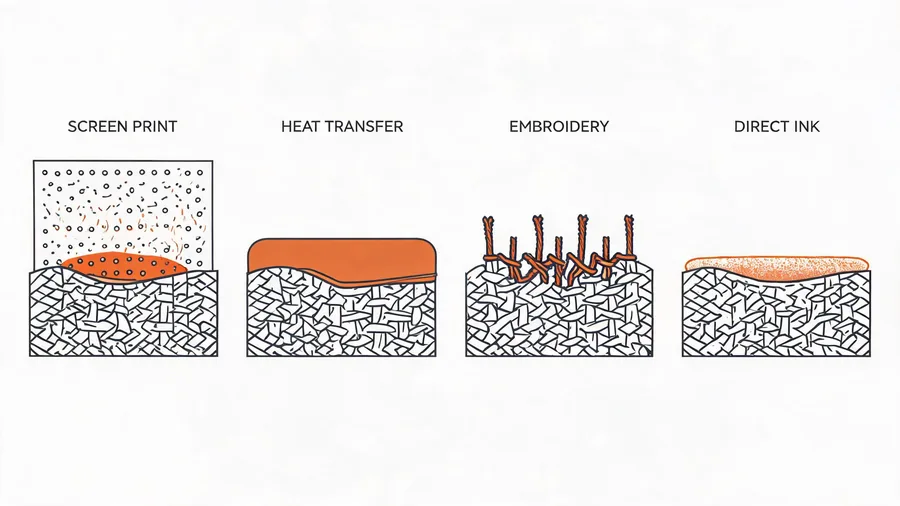
Screen printing. Ink is forced through a prepared screen onto the fabric. One screen per color. It is the workhorse for solid-color logos at volume, and it holds up well on flat canvas panels. Setup cost is real, but it is spread across the run. If your design has four colors, you are paying for four screens.
Digital textile printing (DTG). Artwork is printed by controlled inkjet deposition straight onto the material. No screens, no per-color setup. It handles gradients, photographs and fine detail that screen printing cannot reproduce. The trade-off is cost per piece and the fact that ink chemistry has to match the fiber. On a 100% cotton canvas it behaves one way; on a cotton-poly blend it behaves another.
Heat transfer and dye sublimation. A prepared graphic is transferred with heat and pressure. Dye sublimation turns disperse dye into gas that bonds with suitable polyester surfaces. That word "polyester" matters. Sublimation is a poor fit for a natural cotton canvas; heat-transfer graphics are more forgiving but adhesion, stretch, wash and abrasion performance must be validated on your actual substrate.
Embroidery. Thread is stitched into the material for a durable raised design. It reads as premium and it survives washing better than most prints. It also distorts panels if nobody controls backing, needle selection and stitch density. On a lightweight canvas tote, a dense embroidery block can pucker the panel. On a heavy canvas duffel, the same design sits flat.
| Method | Best for | Weak spot | Artwork demand |
|---|---|---|---|
| Screen printing | Solid-color logos, repeat runs, large front panels | Each extra color adds a screen and a setup step | Vector art, separated by color |
| Digital textile printing | Gradients, photos, short runs, many designs in one order | Higher cost per piece; ink must suit the fiber | High-resolution raster or vector |
| Heat transfer / sublimation | Detailed graphics on compatible synthetic surfaces | Poor bond on untreated natural canvas | Mirrored, color-corrected file |
| Embroidery | Premium look, small text, wash durability | Panel distortion if density is not controlled | Digitized stitch file, not a JPEG |
Per-Unit Personalization vs One Logo for the Whole Run
This is where quotes go sideways. A single logo repeated across a run is one setup and one production stream. Individual names, numbers or initials are variable data. Every piece is different, and that changes everything downstream.
Variable-data work usually runs through digital printing or a thermal-transfer label process, where the changing element is printed per piece. Screen printing cannot do it economically, because you would need a screen for every name. Embroidery can, if each name is digitized, but digitizing a name is a separate operation from digitizing a logo, and the two are priced differently.
So when a buyer asks for a customised canvas bag with a different name on every unit, the honest answer is: yes, at a different cost structure than the flat-logo run, and with a longer approval cycle because every variation has to be checked. Nobody should quote a one-off name program at the same per-unit rate as a single-logo program. That is not a negotiating position. It is arithmetic.
What to settle before you ask for pricing
- How many distinct designs or names are in the order.
- Whether the logo is fixed and only the name changes, or both vary.
- Where the decoration sits on the bag, and on which panel.
- Whether the bag will be washed, and how often.
- Whether the canvas is natural, dyed, coated or blended.
Those five answers decide the method. The method decides the cost. Skipping straight to "what is your price" wastes a round of emails for everyone.
Artwork Files: What Actually Works
Vector files are the default for logos. Adobe Illustrator (.ai), EPS, PDF and SVG scale without losing edges, which matters because a logo printed on a small pocket and the same logo printed across a tote front are two different sizes from one file. If all you have is a JPEG, expect either a redraw or a lower-detail result.
Raster files still have a place. Digital textile printing can reproduce a photograph if the resolution is high enough at final print size. A 300-pixel-wide image blown up to fill a tote panel will look soft. That is not a printing fault.
Embroidery needs a stitch file, not a picture. Digitizing converts your artwork into stitch paths, and the digitizer decides underlay, density, pull compensation and stitch direction. A good digitized file runs cleanly. A bad one runs dense, puckers the panel, and breaks needles.
Color is its own conversation. Pantone references give the printer a target, and buyers should expect an approved physical reference rather than a screen match, because monitors lie. A lab dip or a strike-off exists precisely so both sides agree on what "brand red" means before bulk production starts.
Sampling and Approval: The Step Buyers Try to Skip
Every decoration job should pass through a physical sample. Not a digital mockup. A real bag, printed or embroidered with the real artwork, on the real canvas.
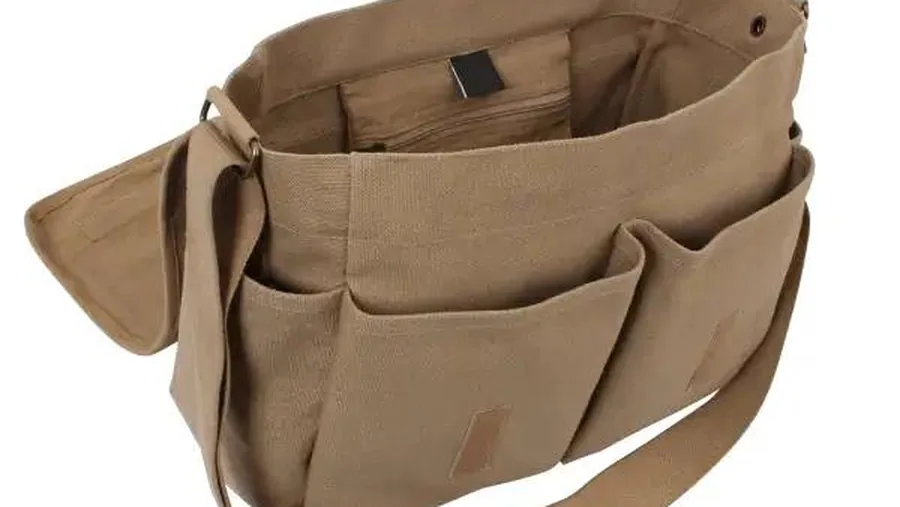
The sequence is standard. A proto sample checks shape and construction. A pre-production sample is made with the intended bulk materials and approved methods. A golden sample is the signed reference that production is compared against. If your supplier is not asking you to sign something, ask why.
Two things get approved at this stage, and they are separate approvals. Artwork approval covers color, scale, registration and placement. Workmanship approval covers stitch quality, trimming, symmetry and cleanliness. A bag can pass one and fail the other.
Change control matters here too. Once the golden sample is signed, any revision to artwork, placement or material should run through a documented approval, because an unlogged tweak on the line is how a 5,000-piece run ends up off-brand.
Canvas Selection Changes the Print Result
Canvas weight and finish affect how ink sits on the surface. A light canvas takes a print differently than a heavy one, and a coated or water-resistant canvas behaves differently again, because the coating sits between the ink and the fiber.
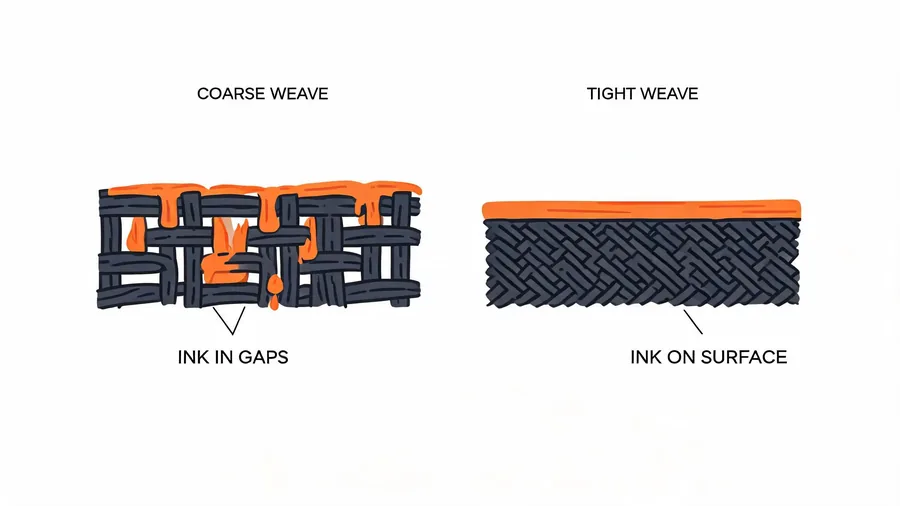
Natural cotton canvas is the classic choice for printed totes and shoppers. Blends and recycled-content canvas are available, and buyers sourcing against a sustainability brief often ask for recycled fiber, but the decoration method has to be re-validated on that substrate rather than assumed from a cotton spec. The same goes for colored canvas: printing light ink on dark canvas is a different proposition than dark ink on natural.
Structure matters too. A flat tote panel is easy to print. A bag with a gusset, a padded base or a rigid frame limits how the panel can be laid flat on the machine, and that can push placement or rule out a method entirely. If your design has a logo that must sit across a seam, say so early.
For buyers comparing formats, the same decoration logic applies across categories. A canvas bag program and a canvas cosmetic pouch both take screen print and embroidery, but the panel sizes and the handling differ. Broader category context sits in the canvas totes bulk buying guide if you are still shaping the program.
Where Bulk Orders Usually Go Wrong
Wrong file, late. The buyer sends a low-resolution logo after the quote is accepted. Production stalls while someone redraws it.
Color drift. No physical standard was approved, so the first bulk bag does not match the sample the buyer had in mind.
Placement creep. The logo was approved on a mockup with no coordinates, so the factory places it by eye and every bag differs slightly.
Mixed methods in one order. Half the bags screen printed, half embroidered, quoted as one line item. The costs are not comparable and the lead times are not either.
Assumed personalization. The buyer expects individual names at flat-logo pricing. That expectation has to be corrected before the order, not after.
None of these are exotic. All of them are prevented by a tech pack and a signed sample. A tech pack is the controlled specification: dimensions, materials, construction, artwork, labels, packaging and test requirements in one document. It is the cheapest thing you will ever produce in a bulk order, because it is the only thing that stops the arguments later.
If you are sourcing custom canvas bags with logo work for the first time, start with one design, one method and one physical sample. Prove the process. Then scale it. Buyers who try to launch six SKUs with four decoration methods in a single first order tend to spend their time firefighting instead of selling.
Send your spec, artwork and target quantity through the contact page and the right method can be matched to your job before anything is quoted.
Frequently Asked Questions
Can every bag in a bulk order have a different name printed on it?
Yes, but it is a variable-data job, not a repeat-logo job. Individual names usually run through digital printing or a thermal-transfer label process, where the changing element is produced per piece. Screen printing needs one screen per color per design, so a different name on every bag would mean a screen per bag, which is not economic. Expect a different cost structure and a longer approval cycle than a single-logo run, because every variation has to be checked.
What artwork file format should I send for a logo on canvas?
Vector files are the safe default: Adobe Illustrator, EPS, PDF or SVG. They scale without losing edge quality, which matters when the same logo appears on a small pocket and a full tote panel. High-resolution raster files can work for digital textile printing if the resolution holds at final print size. Embroidery needs a digitized stitch file, because the digitizer sets underlay, density and stitch direction. A JPEG alone usually means a redraw.
Is screen printing or embroidery better for a bulk canvas bag order?
They solve different problems. Screen printing suits solid-color logos at volume on flat panels, and the setup cost is spread across the run. Embroidery gives a raised, durable mark that survives washing well and reads as premium, but dense designs can distort a light canvas panel if backing and stitch density are not controlled. Many programs use both: embroidery on a structured bag, screen print on a flat tote.
Why do I need a physical sample if I already approved a digital mockup?
Because a mockup cannot show how ink sits on your actual canvas, how a stitch density pulls the panel, or where the logo lands relative to a seam. The pre-production sample is made with the intended bulk materials and approved methods. The golden sample is the signed reference production is compared against. Artwork approval and workmanship approval are separate checks, and a bag can pass one while failing the other.