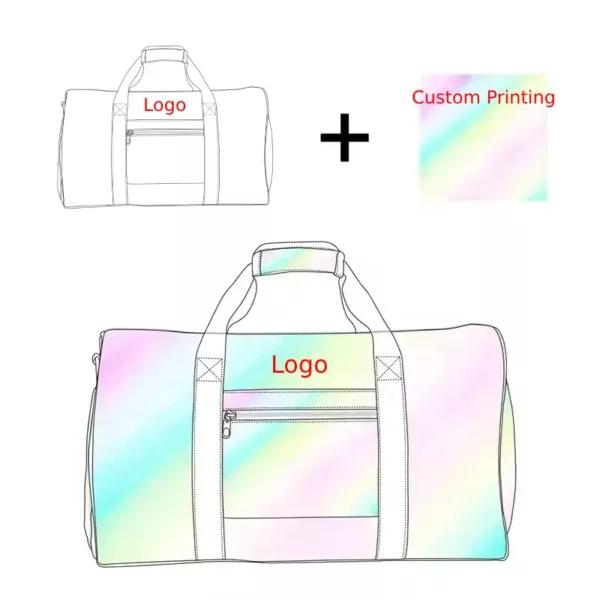
New Product Waterproof Reasonable Price Travel Waterproof Duffel Bag Yoga Zipper Quilted Duffle Bag
SKU LB-2429
| Tag | Textile Material |
|---|---|
| Product Number | LB-2429 |
| Category | Luggage |
| Material | Polyester |
| Dimensions | 53cm*28cm*30cm,0.94kg |
| Color | (Customized Made) |
Camytonc · 4 models
Textile Duffel Bags built to your spec. Every model below is a real factory record — material, dimensions and hardware as produced. Send a SKU number or your own tech pack for a quote.
SKU LB-2429
| Tag | Textile Material |
|---|---|
| Product Number | LB-2429 |
| Category | Luggage |
| Material | Polyester |
| Dimensions | 53cm*28cm*30cm,0.94kg |
| Color | (Customized Made) |
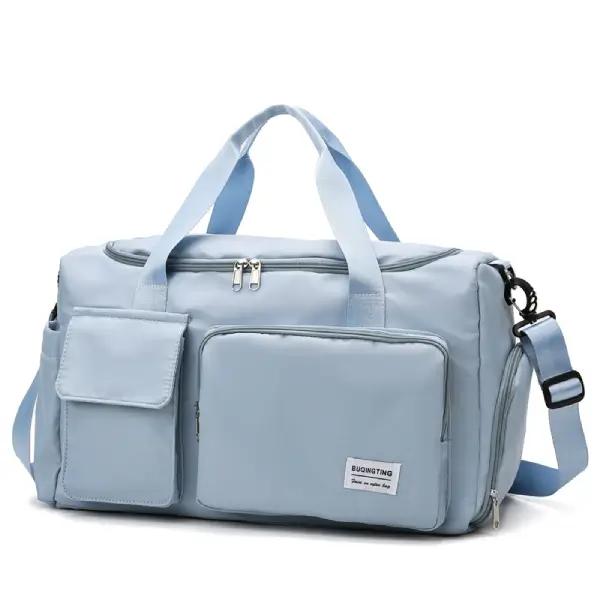
SKU LB-4105
| Tag | Textile Material |
|---|---|
| Product Number | LB-4105 |
| Category | Luggage |
| Material | Nylon |
| Dimensions | 45*29*25cm,0.7kg (Customized Made) |
| Color | (Customized Made) |
| Custom Logo | Accept Customized Logo |
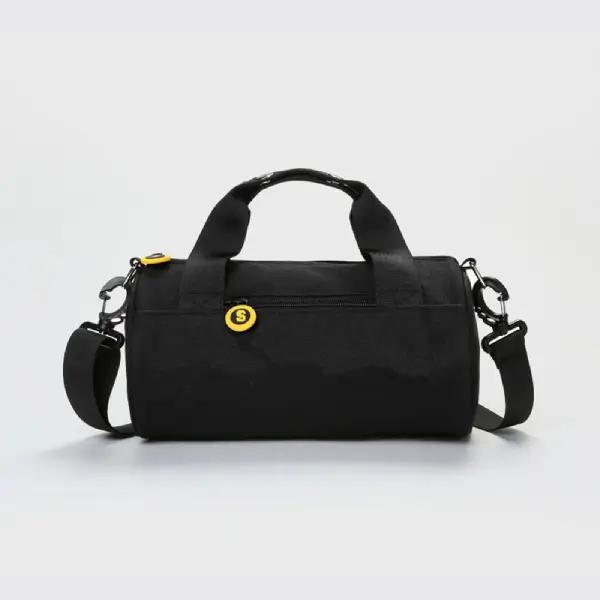
SKU LB-4132
| Tag | Textile Material |
|---|---|
| Product Number | LB-4132 |
| Category | Luggage |
| Material | Polyester |
| Dimensions | Small:28x15x15cm, Large:33x18x18cm (Customized Made) |
| Color | (Customized Made) |
| Custom Logo | Accept Customized Logo |
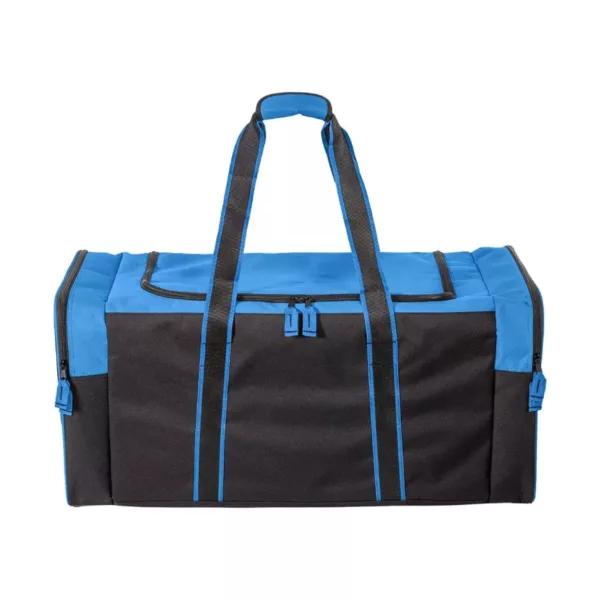
SKU LB-5683
| Tag | Textile Material |
|---|---|
| Product Number | LB-5683 |
| Category | Luggage |
| Material | Polyester |
| Dimensions | 20(L)*10(W)*11(H) inch, 1.3 lbs |
| Color | (Customized Made) |
| Custom Logo | Accept Customized Logo |
When you buy wholesale duffel bags, the shell material does most of the work. It decides how the bag handles rain, abrasion, folding, and print. It also sets the price floor. A sourcing manager who picks the wrong shell for the end use will hear about it from customers within weeks. Say you're ordering for a gym chain. A stiff, coated fabric might look premium in photos. But it feels noisy and sweaty in a locker room. A soft, uncoated cotton canvas feels great. It soaks up moisture and stains, though. Neither is wrong. They're wrong for that buyer.
The table below compares the realistic options for duffel construction. We've left out exotic materials that don't hold up in bulk production. Each row is a starting point, not a verdict. A good factory can push any of these further with coatings, backings, or lamination.
| Material | Good for | Where it fails |
|---|---|---|
| Polyester fabric | Budget-friendly bulk orders, sharp dye sublimation, wide color range, recycled-content options | Lower abrasion resistance in rough handling, can feel thin without a backing |
| Nylon fabric | High strength-to-weight, soft hand feel, good abrasion resistance, packs down small | Higher cost, stretches under heavy load, needs a coating for water resistance |
| Canvas (cotton or blend) | Structured look, vintage branding, natural texture, ages well | Heavy when wet, slow to dry, prone to staining, higher shipping weight |
| Ripstop fabric | Reinforcement grid limits tear propagation, good for travel and outdoor duffels | Grid texture shows through prints, not always necessary for light-duty use |
| Synthetic leather | Leather-like surface for trim or accents, consistent color, lower cost than leather | Can crack at fold points, not breathable, surface consistency varies by supplier |
| Mesh | Ventilation panels, wet-gear compartments, visible organization pockets | Weak as a main shell, snags easily, no weather protection |
One thing buyers miss: the shell is only half the story. The backing and coating change how that shell behaves. A polyester fabric with a light polyurethane coating resists light rain. The same polyester with a polyvinyl chloride coating becomes stiff, wipe-clean, and much harder to sew. Thermoplastic polyurethane film lamination gives you a waterproof duffel. That one can be welded instead of stitched. But welded seams need different equipment and a different QC checklist. If your factory doesn't run welded construction regularly, don't spec it for a first order.
Padding and reinforcement matter too. A duffel with no base board will sag when someone sets it down loaded. A thin plastic board in the base keeps the shape and protects the contents. Closed-cell foam panels in the side walls add structure without much weight. Open-cell foam feels softer. It absorbs moisture and breaks down faster, though. For a duffel that will sit on wet locker room floors, closed-cell is the safer call. For a fashion weekender that lives in a car trunk, open-cell with a liner works fine.
Wholesale duffel bags are not one product. The same factory can make a $4 gym giveaway and a $38 travel duffel. The difference is in how you specify. Here are three buyer situations that show how the decisions change.
First: the promotional buyer. Say a brand needs 5,000 duffels for a trade show or a retail promotion. The bag has to look good in a photo. It has to hold up for one or two uses. And it has to hit a hard unit cost. This buyer should specify a lightweight polyester shell, a simple U-shaped opening, and a single interior slip pocket. No base board, no fancy hardware, no padded shoulder strap. A webbing carry handle and a basic zipper are enough. The spec that actually changes the outcome here is the print area. A large, flat side panel gives the logo room to breathe. A bag with too many seams and straps breaks up the artwork. This buyer should also ask about flat-pack shipping. A duffel that folds flat costs less to ship than one with a rigid base.
Second: the travel and outdoor buyer. This buyer is selling to people who check bags, carry them through airports, and stuff them under seats. The duffel needs to survive abrasion, occasional rain, and being overpacked. Here the spec shifts to a heavier nylon with a PU coating. Or a coated polyester with a ripstop grid. The zipper matters more than the shell. A #8 or #10 zipper with a rain flap beats a #5 zipper every time. This buyer should specify bartack reinforcement at the handle anchors and the shoulder strap attachment points. Those zones receive repeated peak loads when someone lifts a 20 kg duffel by one strap. The base needs a semi-rigid board or a double layer of fabric. And the buyer should ask for a water-resistance test on the coated shell, not just a visual check. A duffel that wets through in a light rain will generate returns.
Third: the fashion or boutique buyer. This buyer cares about hand feel, drape, and how the bag looks on a shelf. They might want a cotton canvas shell with synthetic leather trim. Or a soft nylon with a matte finish. The spec decisions here are about texture and colorfastness. A canvas duffel in a dark color can transfer dye onto light clothing if the colorfastness is poor. The buyer should ask for a crocking test on any dark or saturated color. Hardware finish matters too. Matte black zippers and pulls look different from shiny nickel. The buyer should approve a physical pre-production sample, not just a photo. A photo won't show how the bag slouches when it's half empty. This buyer should also think about the interior. A visible lining seam or a messy binding will ruin the unboxing experience for a boutique customer.
Not all customization is equal. Some changes are free or nearly free. Others require new tooling, new dies, or a longer production run. A buyer who knows the difference can negotiate better and avoid surprise costs.
Changes that don't change tooling: color changes on the same fabric, printed logo placement, woven label design, zipper pull color, and thread color. These are specification changes. The factory adjusts the cutting plan or the sewing instruction and moves on. A color change might add a few days if the fabric needs to be dyed or sourced. A logo change on a woven label requires new label artwork but no new mold. These changes are cheap. A buyer should feel free to ask for them up to the point where cutting starts.
Changes that do change tooling: a new zipper size, a new hardware shape, a custom buckle, a molded rubber logo, or a new base board shape. These require a new die, mold, or cutting template. The factory will charge a tooling fee. The lead time stretches because the tool has to be made, tested, and approved. If a buyer specifies a heavier coated polyester shell instead of the standard uncoated one, that's a material substitution. It changes the sewing needle, the thread tension, and the seam sealing. It's not a new mold, but it's not free either. The buyer should expect a price increase and a longer sampling cycle.
The honest rule is this: if the change is on the surface, it's cheap. If the change is in the structure, it costs. A buyer who wants a custom duffel with a unique silhouette, a molded base, and a welded waterproof construction is not ordering a standard product. That's a development project. The factory should quote it as one. The MOQ for logo processes varies by method. Embroidery, screen printing, and heat transfer each have their own setup costs and minimums. Ask for the number before you commit to a process. Don't assume one is cheaper than another. A heat transfer might look cheap but require a new plate for every color. Embroidery might cost more per unit but have no plate fee. The math depends on your order size.
This is where good buyers earn their margin. The pre-production check is not a formality. It's the last chance to catch a problem before 10,000 units ship. Here's what to look at for duffel bags.
First, check the dimension diagram against the physical sample. The height, width, and depth should match the spec within tolerance. A duffel that's 2 cm shorter than spec changes the capacity. A buyer who ordered a 40L duffel and receives a 35L duffel has a claim. Measure it. Don't eyeball it. The opening length matters too. A zipper that's too short makes the bag hard to pack. A zipper that's too long adds cost and looks sloppy.
Second, check the seam construction. Duffel bags fail at the seams before they fail anywhere else. Look at the handle anchors. They should have bartacks or box-X reinforcement. Pull on them. Hard. A handle that rips out on the first use is a return. Check the base seam. This seam carries the full weight of the contents. It should be double-stitched or bound. Check the zipper tape. It should be sewn straight with no puckering. A wavy zipper looks bad and snags.
Third, check the coating and water resistance if you spec'd them. A visual check won't tell you if the PU coating is too thin. Ask for a water column test or a spray test on the coated shell. If the factory can't provide one, that's a red flag. The same goes for colorfastness. A dark duffel that bleeds onto a white shirt is a liability. Ask for a crocking test result. These tests are standard. A factory that won't run them is telling you something.
Fourth, check the packing method. A duffel that arrives creased, squashed, or covered in loose threads looks cheap. The packing spec should include a polybag, a shape-control insert if the bag has structure, and a carton quantity that doesn't crush the bottom layer. Ask for a shipping test if the order is large. Drop a loaded carton from waist height. If the duffels inside deform, the packing spec needs work.
Finally, watch the claim language. If your marketing says "waterproof," the duffel needs to pass a waterproof test, not just a water-resistant one. If your marketing says "40L capacity," the measured volume needs to support that number. A buyer who overclaims on performance wording inherits the chargebacks. Be precise on the spec sheet. The factory can only build what you define.
For related categories, see our cooler bag manufacturing and custom tote bag pages. If you're comparing duffel constructions, our canvas bag factory page covers the natural-fiber options in more detail.