Beach bags in bulk are not one product. They are a family of constructions that share a job: carry wet, sandy, heavy things to the water and back without falling apart by August. That job decides almost every specification you will write.
Say a resort buyer needs 3,000 units across four colourways, delivered before a season opening. The bag that survives that season is chosen on shell fabric, seam type and closure, not on how it photographs on a category page. This guide walks through those decisions in the order a factory actually asks for them.
Which Beach Bag Materials Actually Survive Sand, Salt and Sun
Canvas is a plain-woven fabric, usually cotton or a cotton blend, picked for structure, texture and abrasion performance. Cotton duck is the tighter, smoother variant: closely packed yarns, firm face, less slub. Both hold a printed panel well and both soften with washing, which some buyers want and some do not.
Mesh is an open structure. Sand and water pass through it instead of sitting in the bottom of the bag. A mesh body paired with a solid base is a common resort pattern, and it is the only construction where drainage is designed in rather than engineered around.
Polyester and nylon are dimensionally stable and widely printable. Their water resistance comes from coating and weave, not from the fibre name. A plain-weave nylon with no coating sheds almost nothing. The same yarn with a polyurethane coating and a tight weave behaves very differently. Fabric specification ranges run from light base weights up through heavier deniers, and canvas is commonly quoted in ounces per square yard. Ask for the number in writing, because "heavy canvas" means nothing across two suppliers.
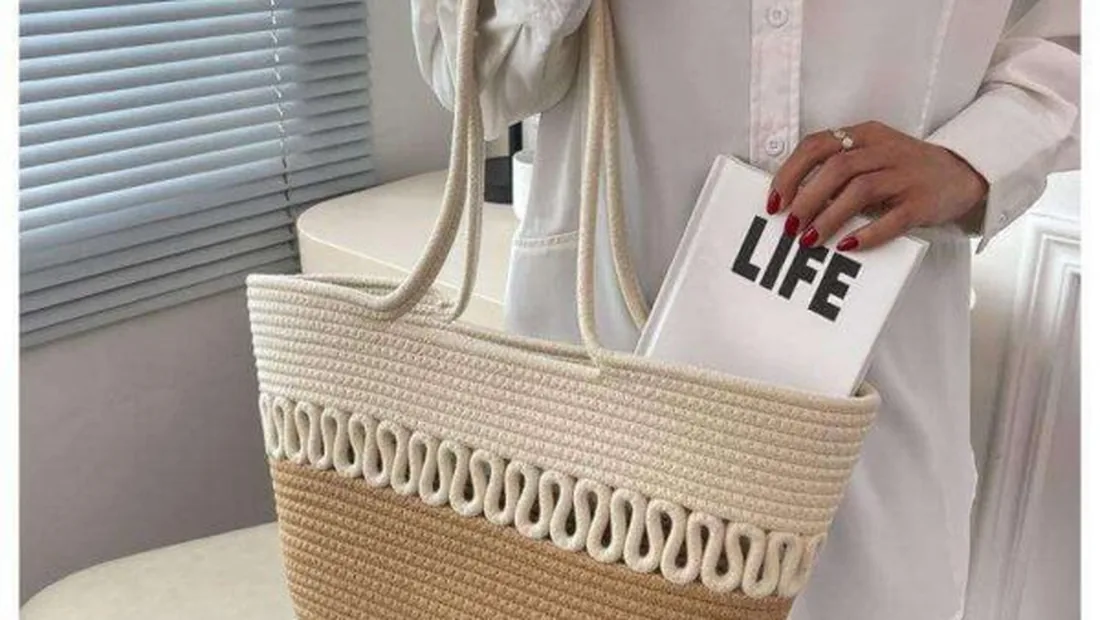
Woven straw and rattan-style bodies are a dry-load option. They look right on a resort shelf and they sell. They should never be sold as waterproof, because they are not, and a returns spike in week three is the usual result of pretending otherwise. Position them as a dry tote or a market bag.
Salt, UV and sunscreen degrade materials differently. Salt crystals abrade coated surfaces when the bag is folded and dragged. UV breaks down unprotected polymer coatings over a season of daily exposure. Sunscreen and oils attack some printed surfaces and some clear films. None of this is solved by fabric choice alone; it is solved by coating selection, print method and a test line in the specification.
| Shell option | Best for | Watch out for |
|---|---|---|
| Cotton canvas / duck | Structure, print panels, dry-to-damp loads | Weight gain when wet; needs a finish if it must shed water |
| Mesh | Drainage, ventilation, sand shedding | No structure on its own; needs a solid base and bound edges |
| Coated polyester or nylon | Wipe-clean surfaces, print, light weight | Coating quality drives performance; stitched seams still leak |
| Woven straw or rattan-style | Dry loads, resort merchandising | Not waterproof; fragile at handle attachments |
Coatings, Liners and Seams: The Spec Lines Buyers Forget
A coating is a polymer layer applied to fabric to improve water resistance, hand feel or durability. Polyurethane and polyvinyl chloride are the two common systems; thermoplastic polyurethane film is used where a flexible waterproof laminate or a welded construction is needed. Coating weight belongs in the specification as a defined value, because two mills can supply the same base cloth with very different coating loads.
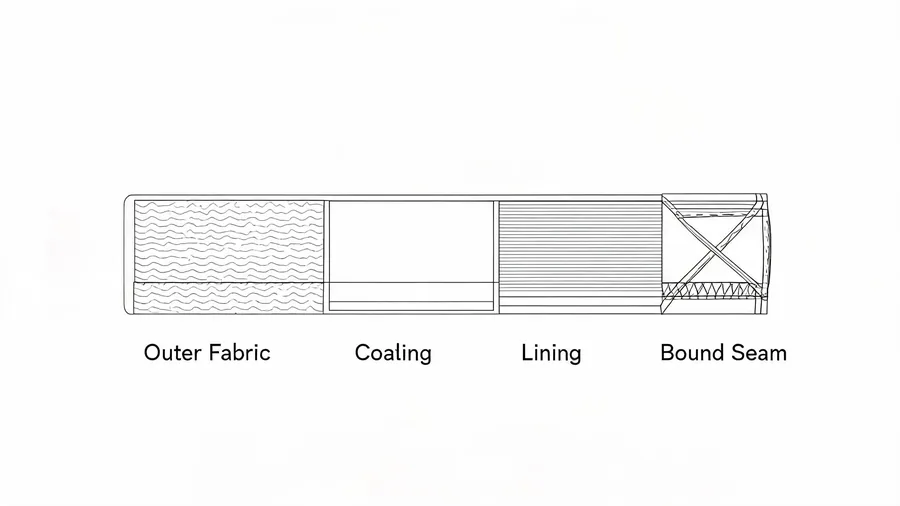
Here is the part that catches people. A coated shell with a stitched seam still leaks. The needle makes holes, and water finds them. Seam sealing, heat-welded seams, waterproof zippers and roll-top closures are construction choices, not material choices. You can buy the best coated fabric on the market and lose the argument at the seam line.
Linings matter too. Polyethylene vinyl acetate film is a flexible option for cleanable, moisture-resistant interiors, which is what you want if the bag will hold wet swimwear or a leaking bottle. A nonwoven backing is cheaper and adds stability, but it is not a moisture barrier.
Write all of this into the spec as separate lines. Shell fabric, coating type, coating weight, seam type, zipper type, closure type, lining material. A supplier who can quote against those lines is a supplier you can compare against another. See the woven bag constructions and canvas bag range for how these shells are typically assembled.
How to Write a Beach Bag Spec Sheet Before You Ask for Prices
The tech pack is the controlled document. It holds dimensions, materials, construction details, artwork, labels, packaging and test requirements. Without one, every quote you receive is priced against a different bag.
Supporting documents sit behind the tech pack. The bill of materials lists every material, component, quantity, colour and supplier reference for one product. The colour standard is the approved physical or digital reference used to judge production colour. A lab dip is a small dyed material sample submitted for approval before bulk, and a strike-off is a printed sample used to approve artwork, colour, scale, registration and print quality.
Dimensions need tolerances. A critical dimension is one that affects fit, function, component compatibility or safety, and it gets a tighter tolerance than a cosmetic one. For a beach bag, call out handle drop and opening length explicitly. Handle drop controls whether the bag sits on a shoulder or in a hand, and opening length controls how easily a wet towel goes in.
Then set the acceptance rules. Defect classification assigns critical, major or minor severity based on risk and product impact. AQL is the acceptance quality limit used with a sampling plan to set inspection sample size and acceptance numbers. The exact values depend on the agreed specification and the inspection standard you contract for. Put them in the purchase order so two suppliers are judged on the same criteria.
Structuring a Bulk Beach Bag Order: MOQ, Colour and Size Breaks
MOQ is set per material, per colour and per finished product. One style can carry several different minimums at once, and that is where budgets go sideways.
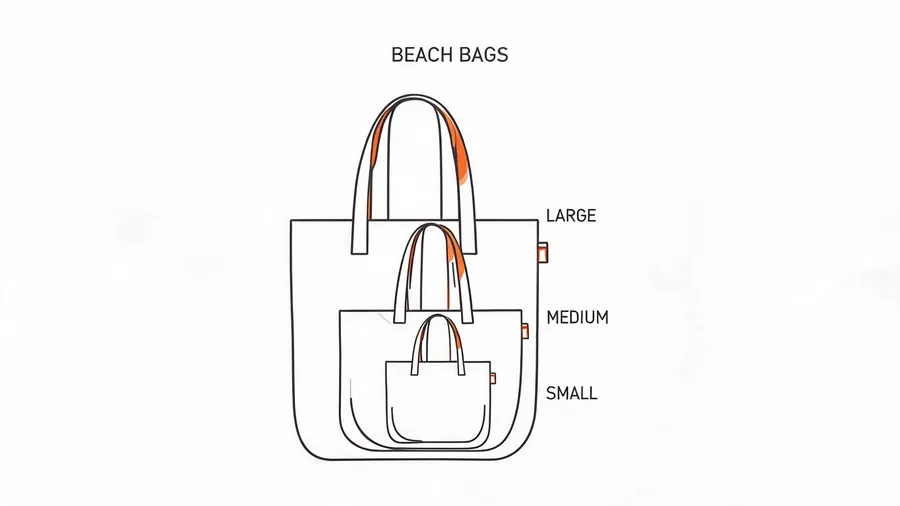
Colour count multiplies the minimum. Four colourways of the same tote is not one order; in production terms it is four runs, four lab dips, four approvals and four sets of trims. Pantone matching is normally quoted as a separate line for the same reason.
Size and handle-drop variants are separate SKUs, not options inside one line. A medium and a large tote with different strap geometry are two products with two bills of materials. Treating them as one line is how a buyer ends up short on one size and long on another.
Before a purchase order is issued, confirm in writing: the approved golden sample reference, the colour standard, the tolerance table, the defect classification, the inspection standard, the packaging method and the carton marks. If any of those is verbal, it does not exist.
Building a Coordinated Beach Range: Totes, Pouches and Cooler Bags
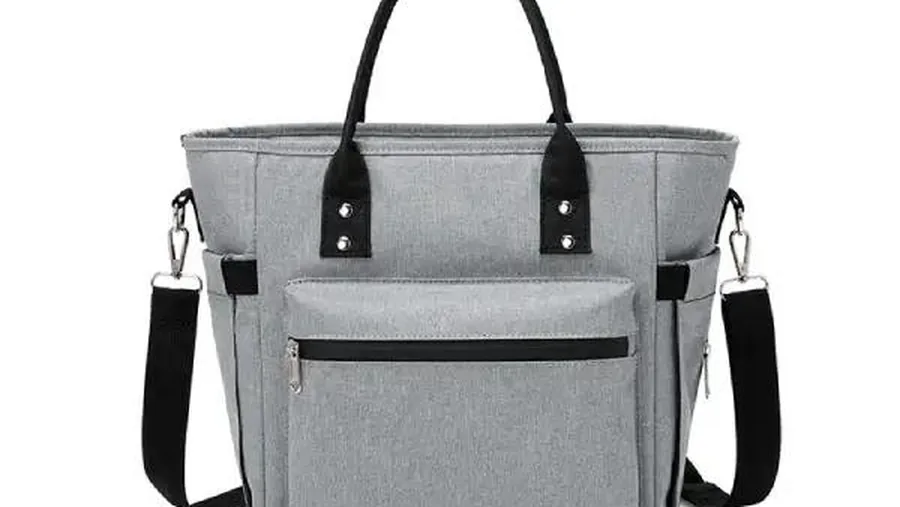
Imagine a resort programme that needs a tote, a small zip pouch, a drawstring bag and a cooler bag on the same shelf. Four items, one look. The way to get there is to lock one shell material and one colour standard across the whole range before any sampling starts.
Sharing artwork across items keeps print registration and colour consistent, but it also means the artwork has to be redrawn for each panel size. A print that reads well on a large tote face can disappear on a pouch. Approve a strike-off for each item, not one strike-off for the family.
Cooler bags are their own specification. They use closed-cell foam, often expanded polyethylene, as the thermal layer, and thermal performance depends on foam thickness, liner type and seam integrity. Pair a tote with a cooler bag only if the cooler's construction is specified on its own terms. The same logic applies to a custom tote and a cosmetic pouch in the same range.
Packaging is part of the range, not an afterthought. Poly bags, colour boxes, hang tags and dust bags all carry the same colour standard and the same brand mark. Order them with the bags, not after.
Sample to Bulk: What the Timeline and the Approvals Look Like
Sampling has distinct stages and they are not interchangeable. A proto sample evaluates concept, shape, construction and initial dimensions. A fit sample evaluates wear, access, strap geometry and how the bag sits on a person. A pre-production sample is made with the intended bulk materials and approved methods before mass production begins.
The golden sample is the approved physical reference used to compare production workmanship and appearance. It is the document that ends arguments. Keep it sealed, signed and dated.
Change control is the documented approval process for any revision to materials, patterns, construction, artwork, tests or packaging. A verbal change to a strap width is still a change, and it needs a signature. Sample cost and turnaround are commercial terms, so settle them before sampling starts rather than after the first round.
Choosing a Bulk Beach Bag Supplier
Ask which materials the supplier actually produces, not which it can source. A factory that runs its own woven and canvas lines controls its own quality; a trading office that sources everything controls the paperwork and little else.
Ask for the factory's certification scope and audit documentation, not a certificate image. A certificate image tells you a document exists. The scope tells you what it covers. Relevant schemes include amfori BSCI, ISO 9001, SGS, TUV and GRS, and the scope document is the only version worth reading.
Ask how colour approval, inspection and defect handling are handled in writing. Ask what the sample policy is, and whether sampling is paid. A supplier who answers those four questions with documents is a supplier worth quoting against.
When the spec is ready, send it through the contact page for a quote.
Frequently Asked Questions
Where can I buy beach bags in bulk?
Directly from a bag factory that runs its own production lines, or from an importer that buys from one. Factory-direct gives you control over shell fabric, coating, seams and trims, and it lets you approve a golden sample before bulk. Importers can be faster on stock items but rarely let you change construction. Either way, ask which materials the supplier actually produces before you ask for a price.
Where can you buy bags in bulk?
The same routes apply across bag categories: canvas totes, woven bags, cooler bags, cosmetic pouches and backpacks. The useful filter is not the category, it is the construction. A supplier that runs woven and canvas lines will quote a beach tote accurately and a foam-lined cooler bag only if it also runs that construction. Match the supplier to the construction, not to the product name.
What should a custom beach bag order include before requesting a quote?
A tech pack with dimensions and tolerances, a bill of materials, the colour standard, artwork files, label and packaging requirements, and the inspection standard. Call out handle drop and opening length as critical dimensions, and state the seam type, zipper type and closure type separately from the shell fabric. Quotes built on that package are comparable. Quotes built on a photo are not.
How do MOQ and colour count affect a bulk beach bag order?
MOQ is set per material, per colour and per finished product, so a single style can carry several minimums at once. Adding a colour adds a production run, a lab dip and a set of trims. Size and handle-drop variants are separate SKUs with their own bills of materials. The practical effect is that colour count and size count drive the real minimum, not the headline unit number.